
Artificial intelligence has moved far beyond the realm of science fiction and experimental research labs. In 2026, AI is embedded in the fabric of daily life — from the diagnostic tools that help physicians detect disease earlier, to the algorithms that power the recommendation engines on your favorite streaming platforms, to the autonomous vehicles navigating busy city streets. The AI revolution is not coming; it is already here, and its pace of transformation is accelerating at a rate that few predicted even five years ago.
The global artificial intelligence market, valued at approximately $196 billion in 2023 according to Grand View Research, is projected to exceed $1.8 trillion by the end of 2026. This explosive growth is not confined to Silicon Valley or a handful of tech giants. Governments, healthcare systems, financial institutions, manufacturers, and retailers across every continent are investing heavily in AI capabilities. Understanding how this revolution is unfolding — and what it means for businesses, workers, and society — has never been more important.
In this in-depth analysis, we examine the industries being most dramatically reshaped by AI, the hard data behind the boom, leading expert perspectives, the complex effects on employment and the economy, and what the near future holds as we look toward 2027 and beyond.
How AI Is Transforming Key Industries
Every major sector of the global economy is experiencing AI-driven disruption, but the depth and speed of transformation vary significantly across industries. Healthcare stands out as one of the most profoundly affected, with AI systems now capable of diagnosing certain cancers with accuracy rates that match or exceed those of experienced human radiologists. Machine learning algorithms analyze millions of medical images, patient records, and genetic data points to identify patterns that would be invisible to the unaided human eye.
In the financial services sector, AI has become the backbone of modern banking and investment. Algorithmic trading now accounts for more than 60 percent of all equity trading volume in the United States. Banks use natural language processing to monitor transactions in real time, flagging fraudulent activity with unprecedented precision. Meanwhile, robo-advisors manage over $2.5 trillion in assets globally, democratizing access to sophisticated investment strategies that were once reserved for ultra-high-net-worth individuals.

Transportation is another arena where AI's impact is impossible to ignore. Autonomous vehicles, once a distant dream, are now operating in limited commercial deployments in several major cities. Companies like Waymo and Cruise have expanded their ride-hailing services to dozens of metropolitan areas, while freight companies are piloting autonomous trucking routes along major interstate corridors. The global autonomous vehicle market is expected to reach $2.3 trillion by 2030, according to McKinsey & Company.
Manufacturing has embraced AI through what industry analysts call "Industry 4.0" or the Fourth Industrial Revolution. Smart factories use computer vision to inspect products at speeds and accuracy levels far beyond human capability. Predictive maintenance algorithms analyze sensor data from equipment to forecast failures before they happen, reducing costly unplanned downtime by as much as 50 percent. A recent report from the World Economic Forum found that AI-driven manufacturing improvements have contributed to a 15 to 20 percent increase in global industrial output over the past three years.
Retail and e-commerce have similarly been reshaped by artificial intelligence. Personalized product recommendations, powered by deep learning algorithms that analyze browsing behavior, purchase history, and demographic data, now drive an estimated 35 percent of Amazon's total revenue. Supply chain optimization through AI has reduced waste, shortened delivery times, and improved inventory management for retailers of all sizes.
- Healthcare AI adoption grew by 47% between 2024 and 2026, with over 75% of hospitals in developed nations now using some form of AI-assisted diagnostics.
- AI-powered fraud detection saved the global banking industry an estimated $44 billion in 2025 alone.
- Autonomous vehicle deployments increased by 300% from 2024 to 2026 across major U.S. and European cities.
- Smart manufacturing AI reduced production defects by an average of 35% in pilot programs across 12 countries.
The Numbers Behind the AI Boom
The sheer scale of investment flowing into artificial intelligence tells a powerful story about where the global economy is headed. In 2025, global AI investment surpassed $500 billion for the first time, according to Stanford University's AI Index Report. Venture capital funding for AI startups alone reached $97 billion, a 40 percent increase over the previous year. Major technology companies — including Microsoft, Google, Amazon, Meta, and Apple — collectively spent more than $200 billion on AI research and infrastructure in fiscal year 2025.
"We are witnessing the most significant technological transformation since the advent of the internet. AI is not just a tool — it is becoming the foundational infrastructure of the modern economy." — Dr. Fei-Fei Li, Co-Director of Stanford's Institute for Human-Centered AI
The data supports this assessment. According to a comprehensive analysis by MIT Technology Review, AI-powered productivity gains contributed an estimated $4.4 trillion to global GDP in 2025. Enterprise adoption of generative AI tools surged to 72 percent among Fortune 500 companies, up from 55 percent in 2024. The average enterprise now runs between 10 and 15 distinct AI-powered applications across its operations.
Geographically, the United States continues to lead in AI investment and research output, accounting for roughly 40 percent of global AI patents filed in 2025. China remains a close second, with particularly strong capabilities in applied AI for manufacturing and surveillance. The European Union has aggressively pursued AI regulation through its landmark AI Act while simultaneously increasing public and private AI investment to compete on the global stage. India, Brazil, and several Southeast Asian nations have emerged as significant players in AI talent and application development.
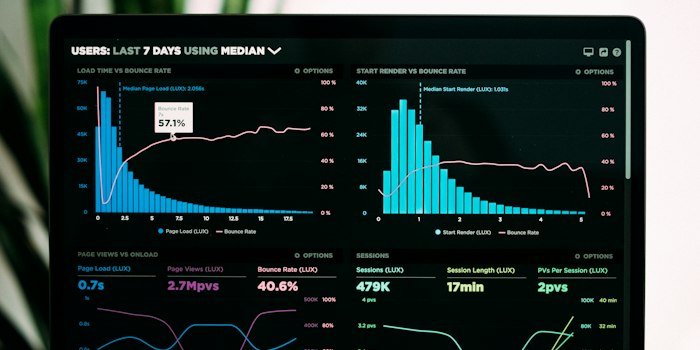
The economic impact extends well beyond the technology sector itself. A 2026 report from the World Economic Forum estimated that AI and related technologies are responsible for the creation of approximately 97 million new jobs globally, while displacing an estimated 85 million existing roles. The net positive employment effect underscores a critical nuance in the AI narrative: while certain categories of work are being automated, entirely new categories of employment are emerging in AI development, training, deployment, oversight, and ethics.
Small and medium-sized businesses (SMBs) have also begun to benefit meaningfully from AI tools. Cloud-based AI platforms from providers like Microsoft Azure, Google Cloud, and Amazon Web Services have made sophisticated machine learning capabilities accessible to organizations that lack the resources to build proprietary systems. A 2026 survey by Deloitte found that 58 percent of SMBs now use at least one AI-powered tool for operations, marketing, or customer service, up from 31 percent in 2023.
Expert Perspectives on AI's Trajectory
Leading researchers and industry executives hold diverse views on where AI is headed, but most agree that the technology's capabilities are advancing faster than governance frameworks can keep pace. This tension between innovation and regulation has become one of the defining themes of 2026.
As we explored in our article on the quantum computing breakthrough, the intersection of AI and quantum computing represents one of the most promising frontiers in technology. Quantum-enhanced machine learning algorithms could dramatically accelerate the training of complex AI models, reducing the time required for tasks like drug discovery simulation from years to weeks.
"The next wave of AI progress will not come from simply making models bigger. It will come from making them more efficient, more reliable, and more deeply integrated into the workflows that matter most to people and businesses." — Dr. Demis Hassabis, CEO of Google DeepMind
The concept of "responsible AI" has gained significant traction in 2026. Major technology companies have established dedicated AI ethics boards, and industry coalitions like the Partnership on AI have expanded their membership to include over 100 organizations spanning technology, academia, civil society, and government. These groups are working to develop standards for transparency, fairness, and accountability in AI systems.
However, not all experts are optimistic. Geoffrey Hinton, often called the "godfather of AI," has continued to raise alarms about the potential risks of advanced AI systems, including the possibility that superintelligent AI could pose existential threats if not properly controlled. His warnings, along with those of other prominent researchers, have fueled a growing public debate about the appropriate pace and direction of AI development.
The regulatory landscape reflects this complexity. The European Union's AI Act, which entered full enforcement in 2025, established a risk-based framework that categorizes AI applications by their potential for harm. High-risk applications — including those used in healthcare, law enforcement, and critical infrastructure — face stringent requirements for transparency, human oversight, and bias testing. The United States has taken a more sector-specific approach, with agencies like the FDA, SEC, and FTC issuing their own AI guidelines relevant to their domains.
China, meanwhile, has implemented comprehensive regulations governing generative AI, deepfakes, and algorithmic recommendation systems. These regulations reflect the Chinese government's dual objectives of fostering AI innovation while maintaining political and social control. The divergent regulatory approaches across these major AI powers create a complex patchwork that multinational companies must navigate carefully.
Real-World Impact on Jobs and the Economy
The question on everyone's mind — will AI take my job? — deserves a nuanced answer. The reality in 2026 is that AI is transforming the nature of work more than it is eliminating it outright. Routine, repetitive tasks are being automated at an accelerating pace, but the demand for human skills like creativity, critical thinking, emotional intelligence, and complex problem-solving is growing correspondingly.
Consider the legal profession. AI-powered document review tools can now analyze thousands of contracts in hours, a task that previously required teams of junior associates working for weeks. However, this automation has not reduced the number of jobs at major law firms. Instead, it has freed lawyers to focus on higher-value work such as strategy, negotiation, and client relationships. The result has been increased firm revenue and, in many cases, higher compensation for attorneys who can effectively leverage AI tools.

In healthcare, AI is not replacing physicians — it is augmenting their capabilities. Radiologists who use AI-assisted diagnostic tools are finding that they can read more scans with greater accuracy, leading to better patient outcomes and reduced burnout. The integration of immersive technologies with AI in healthcare is opening entirely new treatment modalities, from AI-guided virtual therapy sessions to predictive models that help hospitals optimize staffing and resource allocation.
The economic implications of this transformation are profound. Regions and nations that invest in AI education and workforce development are positioning themselves for significant competitive advantages. The United States, with its concentration of leading AI research universities and technology companies, continues to attract top global talent. However, countries like Canada, the United Kingdom, Israel, Singapore, and South Korea have made strategic investments in AI ecosystems that are yielding substantial returns.
At the same time, the AI revolution is exacerbating existing inequalities in some contexts. Workers in routine cognitive and manual occupations face the greatest displacement risk, while those in high-skill, high-education roles tend to benefit disproportionately from AI augmentation. This dynamic has intensified calls for policy interventions including universal basic income experiments, expanded retraining programs, and revised education curricula that emphasize skills complementary to AI.
- The average AI-skilled worker earns 25% more than their non-AI-skilled counterpart in the same role, according to 2026 LinkedIn workforce data.
- Companies with mature AI adoption report 30% higher revenue growth than those still in early stages of implementation.
- Governments worldwide allocated over $120 billion in 2025 to AI-related education and workforce transition programs.
- Sectors experiencing the fastest AI-driven job creation include AI safety, data science, prompt engineering, and AI ethics.
The Road Ahead: AI in 2027 and Beyond
Looking beyond the current year, the trajectory of AI development suggests that the pace of change will only intensify. Several emerging trends are poised to define the next phase of the AI revolution.
Multimodal AI systems — models that can process and generate text, images, video, audio, and code simultaneously — are expected to become the dominant paradigm by late 2027. These systems will enable more natural human-computer interaction and unlock new applications in areas like content creation, scientific research, and education. The convergence of AI with augmented reality and virtual reality technologies promises to create immersive experiences that blur the line between digital and physical worlds.
AI agents — autonomous software entities capable of performing complex, multi-step tasks with minimal human oversight — represent perhaps the most transformative near-term development. Rather than simply answering questions or generating content, AI agents will be able to plan, execute, and iterate on tasks across multiple systems. Early deployments in customer service, software development, and project management have shown promising results, and widespread enterprise adoption is expected to accelerate throughout 2027.
The competitive landscape is also shifting. While the technology giants still dominate in terms of raw computing power and research talent, open-source AI models have narrowed the gap significantly. The open-weight model movement, championed by organizations like Meta's AI research lab and a growing ecosystem of open-source contributors, has democratized access to state-of-the-art AI capabilities. This trend is likely to intensify, fostering greater innovation and competition while reducing the concentration of AI power.
From a regulatory perspective, 2027 is expected to bring the first major international agreements on AI governance. The United Nations and G7 nations have been negotiating frameworks for the safe development and deployment of advanced AI systems, with a focus on preventing misuse in areas like autonomous weapons, mass surveillance, and election interference. The outcome of these negotiations will shape the global AI landscape for decades to come.
📌 Key Takeaways
- The global AI market is projected to exceed $1.8 trillion by the end of 2026, with investment flowing into every major industry from healthcare to transportation to finance.
- AI is augmenting human capabilities rather than simply replacing workers, creating 97 million new jobs while displacing an estimated 85 million roles globally.
- Responsible AI development and regulation are critical, with the EU AI Act, U.S. sector-specific guidelines, and China's comprehensive regulations setting the tone for global governance.
- Small and medium-sized businesses are increasingly adopting AI tools, with 58% now using at least one AI-powered application for core operations.
- The next frontier includes multimodal AI, autonomous AI agents, and the convergence of AI with quantum computing and immersive technologies — trends that will accelerate through 2027 and beyond.
Frequently Asked Questions
What industries are most affected by AI in 2026?
Healthcare, finance, transportation, manufacturing, and retail are the industries most profoundly affected by AI in 2026. Healthcare leads adoption with AI-powered diagnostics and drug discovery, while finance leverages AI for fraud detection, algorithmic trading, and personalized banking experiences. Manufacturing and transportation are seeing transformative changes through smart factories and autonomous vehicles, respectively.
How is AI changing healthcare?
AI is revolutionizing healthcare through predictive diagnostics, personalized treatment plans, drug discovery acceleration, robotic surgery assistance, and administrative automation. AI systems can now detect certain cancers earlier than human radiologists and reduce diagnostic errors by up to 30 percent. Additionally, AI is being used to optimize hospital operations, predict patient deterioration, and accelerate the development of new pharmaceuticals.
Will AI replace human jobs?
AI will automate many routine tasks but is more likely to transform jobs rather than eliminate them entirely. The World Economic Forum estimates that while 85 million jobs may be displaced by 2025, 97 million new roles will emerge that are better adapted to the division of labor between humans and machines. Workers who develop AI-complementary skills such as critical thinking, creativity, and emotional intelligence are likely to thrive.
What are the ethical concerns around AI?
Key ethical concerns include algorithmic bias and discrimination, data privacy violations, lack of transparency in AI decision-making, potential for mass surveillance, deepfakes and misinformation, and the concentration of AI power among a few large technology companies. These concerns have driven the development of regulatory frameworks like the EU AI Act and spurred industry initiatives focused on responsible AI development and deployment.