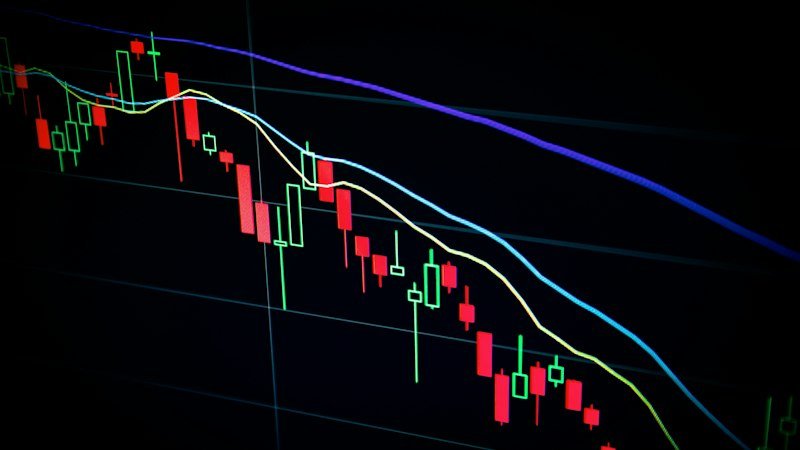
Global stock markets are experiencing one of the most remarkable rallies in recent memory. As of mid-September 2026, the S&P 500 has surged over 28 percent year-to-date, the Nasdaq Composite has gained more than 35 percent, and international indices from the FTSE 100 to the Nikkei 225 to India's Nifty 50 have all reached or approached all-time highs. The MSCI World Index, which tracks large and mid-cap stocks across 23 developed markets, is up 24 percent for the year — its strongest performance since the post-pandemic recovery of 2021.
This is not a narrow, tech-driven rally confined to a handful of mega-cap companies. While technology stocks have certainly led the charge, the breadth of the advance is notable. Small-cap stocks, value stocks, international equities, and even some bond markets have participated in the gains. For individual investors, pension funds, and institutional asset managers alike, 2026 has delivered returns that far exceeded the consensus forecasts published at the start of the year.
But what is behind this extraordinary market performance? And more importantly, how sustainable is it? In this comprehensive analysis, we break down the key drivers of the 2026 rally, identify the sectors leading the advance, examine the pivotal role of central bank policy, offer guidance for investors navigating elevated valuations, and assess the risks that could derail the bull market.
Why Markets Are Surging in 2026
The 2026 stock market rally is the product of several powerful forces converging simultaneously. At the most fundamental level, corporate earnings have grown faster than expected. The blended earnings growth rate for S&P 500 companies in the first two quarters of 2026 reached 14.2 percent, according to Bloomberg data. This growth has been broad-based, with 78 percent of companies beating consensus earnings estimates — the highest beat rate since the post-COVID recovery.
Artificial intelligence has been a primary catalyst for these earnings surprises. Companies that have successfully integrated AI into their operations are reporting significant productivity gains and cost savings. The AI revolution sweeping across industries has translated directly into higher profit margins, with AI-adopting companies in the S&P 500 reporting operating margins 3.5 percentage points higher than non-adopting peers, according to a Goldman Sachs analysis.
Inflation, which plagued markets throughout 2022 and 2023, has continued its descent toward central bank targets. The U.S. Consumer Price Index (CPI) fell to 2.1 percent year-over-year in August 2026, within striking distance of the Federal Reserve's 2 percent target. Core inflation, which strips out volatile food and energy prices, has also moderated, sitting at 2.4 percent. This disinflationary trend has given central banks the room to pursue more accommodative monetary policies, which in turn has supported higher equity valuations.
Consumer spending, which accounts for roughly 70 percent of U.S. GDP, has remained resilient. The labor market continues to be tight, with the unemployment rate holding at 3.9 percent. Wage growth has moderated from its 2024 peaks but remains positive in real terms, supporting household purchasing power. Consumer confidence surveys have also improved, with the Conference Board's Consumer Confidence Index rising to its highest level since early 2020.

Geopolitical stability has also played a role. While tensions persist in various parts of the world, no major new conflicts have erupted in 2026, and several ongoing situations have shown signs of de-escalation. Supply chains, which were severely disrupted during the pandemic and remained fragile through 2024, have largely normalized. Semiconductor supply, in particular, has improved dramatically, supporting both technology production and the broader manufacturing sector.
- S&P 500 earnings growth of 14.2% year-over-year through Q2 2026 exceeded the 10.5% consensus forecast.
- U.S. CPI inflation fell to 2.1%, nearly hitting the Federal Reserve's 2% target for the first time since 2020.
- The unemployment rate held steady at 3.9%, maintaining the tightest labor market in decades.
- Global semiconductor supply improved by 40% compared to 2024, removing a key bottleneck for technology production.
Top Sectors Driving Growth
While the 2026 rally has been broad-based, certain sectors have clearly outperformed others. Understanding which sectors are leading — and why — provides critical insight into the underlying dynamics of the market advance.
Technology remains the undisputed leader. The S&P 500 Information Technology sector is up 38 percent year-to-date, with semiconductor companies, cloud computing providers, and AI software developers posting some of the strongest individual stock gains. Nvidia, which has become synonymous with the AI chip boom, has seen its market capitalization surpass $4.5 trillion. Microsoft, Apple, and Alphabet have also delivered impressive returns as they expand their AI product offerings and monetize existing AI investments.
"The technology sector is not in a bubble — it is reflecting a genuine, structural shift in how businesses operate and generate value. The companies leading this rally have the earnings growth to back up their valuations." — Lisa Su, Chair and CEO of AMD
Healthcare has been the second-best performing sector, gaining approximately 22 percent for the year. Breakthrough drug approvals, the commercialization of AI-powered diagnostics, and strong demand for weight-loss medications from companies like Eli Lilly and Novo Nordisk have driven sector-wide gains. The convergence of technology and healthcare — sometimes referred to as health-tech — has been particularly rewarding for investors.
Energy, which has been a volatile sector in recent years, has staged a notable recovery in 2026. Traditional energy companies have benefited from stable oil prices in the $75 to $85 per barrel range, while clean energy firms have surged on accelerating government incentives and growing corporate demand for renewable power. The Inflation Reduction Act's clean energy provisions in the United States, along with similar initiatives in Europe and Asia, have created a powerful tailwind for the sector.
Financial services have also participated strongly in the rally, gaining approximately 18 percent year-to-date. Higher interest rates earlier in the cycle boosted net interest margins for banks, while the current easing cycle has supported loan growth. Insurance companies have benefited from improved underwriting results, and asset managers have seen inflows accelerate as retail and institutional investors chase the market's strong returns.

Consumer discretionary and communication services sectors have also outperformed, benefiting from strong consumer spending trends and the continued growth of digital advertising and streaming revenues. Meanwhile, more defensive sectors like utilities and consumer staples have lagged, though they have still delivered positive returns in absolute terms.
- Technology sector: +38% YTD, led by AI and semiconductor companies.
- Healthcare sector: +22% YTD, driven by AI diagnostics and breakthrough pharmaceuticals.
- Energy sector: +19% YTD, benefiting from stable oil prices and clean energy investments.
- Financial services: +18% YTD, supported by favorable interest rate dynamics and strong loan growth.
- Real estate: +12% YTD, recovering as interest rate cuts improve financing conditions.
The Role of Central Banks and Monetary Policy
No analysis of the 2026 market rally would be complete without a thorough examination of the role played by central banks. Monetary policy has been perhaps the single most important driver of equity market performance over the past three years, and the actions of the U.S. Federal Reserve, European Central Bank, Bank of England, and Bank of Japan have all contributed to the current environment.
The Federal Reserve, after hiking rates aggressively throughout 2022 and 2023 to combat inflation, began its easing cycle in late 2024. Since then, the Fed has reduced the federal funds rate by a total of 250 basis points, bringing it to 3.75 percent as of September 2026. Fed Chair Jerome Powell has signaled that further rate cuts are possible if inflation continues to approach the 2 percent target, though the pace of cuts is expected to slow as the economy approaches a "neutral" rate level.
The European Central Bank has followed a similar trajectory, cutting rates from their 2023 peak of 4.5 percent to 3.0 percent. The ECB has been slightly more aggressive than the Fed, reflecting the eurozone's weaker economic growth profile and faster disinflation. The Bank of England has also eased, though more cautiously, given persistent services inflation in the United Kingdom.
The Bank of Japan has been the outlier among major central banks, gradually normalizing its ultra-loose monetary policy after more than a decade of negative interest rates. The BOJ raised its benchmark rate to 0.50 percent in early 2026, its highest level since 2008, but has signaled that further increases will be gradual and data-dependent. The yen's appreciation following these moves has created both opportunities and challenges for Japanese equities.
According to Reuters, the aggregate effect of global monetary easing has been to inject unprecedented liquidity into financial markets. Global M2 money supply has expanded by approximately 8 percent over the past 12 months, providing a powerful tailwind for risk assets including equities, real estate, and corporate bonds. This monetary backdrop has also supported the strong performance of alternative assets like private equity and venture capital, which in turn has benefited public markets through improved sentiment and exit activity.
Looking ahead, the path of monetary policy remains the most important variable for equity market performance. Market pricing, based on federal funds futures, implies approximately two additional 25-basis-point rate cuts from the Federal Reserve by the end of 2026, bringing the fed funds rate to 3.25 percent. If these cuts materialize as expected, they should continue to support equity valuations by lowering the discount rate applied to future corporate earnings.
What Investors Should Know
For investors navigating the current market environment, several key principles can help guide decision-making. First and foremost, it is essential to recognize that elevated valuations do not automatically mean a crash is imminent. The S&P 500's forward price-to-earnings ratio currently stands at approximately 22x, above the 10-year average of 18.5x but well below the 30x peak reached during the dot-com bubble. Given the strength of earnings growth and the favorable interest rate environment, many analysts consider current valuations to be reasonable — if not cheap, then at least defensible.
That said, investors should be mindful of concentration risk. The top 10 stocks in the S&P 500 now account for roughly 35 percent of the index's total market capitalization, a level of concentration that has historically preceded periods of underperformance for the largest companies. Diversification across market capitalizations, sectors, and geographies remains a prudent strategy.
Dollar-cost averaging — the practice of investing a fixed amount at regular intervals regardless of market conditions — continues to be one of the most effective strategies for long-term investors. This approach reduces the risk of investing a large sum at a market peak and allows investors to accumulate more shares when prices are lower.

International diversification deserves particular attention in 2026. After years of U.S. market outperformance, international equities have begun to close the gap. European stocks, in particular, have attracted significant inflows as valuations remain attractive relative to U.S. peers and the eurozone economy shows signs of recovery. Emerging market equities, led by India and select Southeast Asian economies, have also delivered strong returns.
For those with a longer time horizon, the current environment presents opportunities in sectors positioned for secular growth. Artificial intelligence, clean energy, healthcare innovation, and cybersecurity are all themes expected to drive investment returns over the next decade. Investors who allocate to these themes through diversified ETFs or carefully selected individual positions may benefit from structural tailwinds that extend well beyond the current market cycle.
- Maintain a long-term perspective and avoid making investment decisions based on short-term market movements.
- Diversify across sectors, market capitalizations, and geographies to reduce concentration risk.
- Consider dollar-cost averaging to mitigate the risk of investing at market peaks.
- Review portfolio allocation periodically and rebalance to maintain target asset class weights.
- Consult with a qualified financial advisor before making significant portfolio changes.
Risks and Challenges Ahead
Despite the strong rally, investors should not ignore the risks that could derail the current bull market. No market moves up in a straight line, and several potential headwinds could trigger increased volatility or a meaningful correction in the months ahead.
The most immediate risk is a resurgence of inflation. While current readings are encouraging, several factors could push prices higher: a spike in energy prices due to geopolitical disruption, a renewed surge in housing costs as interest rate cuts stimulate demand, or second-round effects from strong wage growth. If inflation re-accelerates, the Federal Reserve would be forced to pause or reverse its rate-cutting cycle, which could sharply reprice equity valuations.
Geopolitical risks remain elevated despite the relative calm of 2026. Tensions in the South China Sea, the ongoing conflict in Ukraine, and instability in the Middle East all have the potential to disrupt global trade, energy supplies, and investor sentiment. A major geopolitical escalation could trigger a flight to safety, pushing investors out of equities and into bonds, gold, and other traditional safe-haven assets.
Valuation risk is another concern. While current valuations are supported by strong earnings growth, any deterioration in the earnings outlook — whether from a slowdown in economic activity, margin compression, or a decline in AI-driven productivity gains — could lead to a significant re-rating of equity multiples. Historical precedent suggests that markets with forward P/E ratios above 20x tend to be more vulnerable to corrections when negative catalysts emerge.
Regulatory risk has also increased, particularly for technology companies. The growing regulatory scrutiny of artificial intelligence, antitrust actions against major technology platforms, and data privacy regulations could all impact the earnings and growth expectations of the stocks that have led the current rally. European regulators, in particular, have shown an increasing willingness to impose substantial fines and operational restrictions on large technology companies.
Finally, there is the risk of a liquidity squeeze. Central bank quantitative tightening — the process of reducing balance sheets by allowing bonds to mature without reinvestment — has continued alongside rate cuts. If this tightening accelerates or if a liquidity event triggers a rush for cash, market functioning could deteriorate rapidly, as occurred briefly during the UK gilt crisis of 2022.
📌 Key Takeaways
- Global stock markets have surged to record highs in 2026, driven by strong corporate earnings growth of 14.2%, declining inflation, and favorable central bank policy.
- Technology (+38% YTD), healthcare (+22% YTD), and energy (+19% YTD) are the top-performing sectors, with AI monetization serving as a primary catalyst.
- Central banks have collectively cut rates by 250+ basis points since late 2024, injecting liquidity and supporting higher equity valuations.
- Investors should maintain diversification, consider dollar-cost averaging, and pay attention to international equity opportunities that have begun to outperform.
- Key risks include inflation resurgence, geopolitical disruption, elevated valuations, regulatory scrutiny of technology companies, and potential liquidity events.
Frequently Asked Questions
Why are stock markets at record highs in 2026?
Stock markets are at record highs in 2026 due to a combination of favorable factors including continued AI-driven productivity gains, easing monetary policy from central banks, strong corporate earnings growth of 14.2%, declining inflation near 2%, and robust consumer spending. The technology sector, in particular, has led gains as companies successfully monetize their artificial intelligence investments, translating innovation into higher revenues and profit margins.
Which sectors are performing best in 2026?
Technology, healthcare, and energy are the top-performing sectors in 2026. Technology stocks have surged 38% year-to-date on AI monetization and semiconductor demand. Healthcare has gained 22% driven by breakthrough drug approvals and AI-powered diagnostics. Energy stocks have risen 19% on stable oil prices and accelerating clean energy investments, while financial services have gained 18% on favorable interest rate dynamics.
Should I invest in the stock market now or wait?
Financial advisors generally recommend a disciplined, long-term investment approach rather than trying to time the market. While valuations are elevated, diversification across sectors and asset classes, regular contributions through dollar-cost averaging, and maintaining an appropriate time horizon remain sound strategies regardless of current market conditions. Consider consulting with a qualified financial advisor to tailor your approach to your specific goals and risk tolerance.
What risks could end the 2026 stock market rally?
Key risks include a resurgence of inflation forcing central banks to reverse rate cuts, geopolitical conflicts disrupting supply chains or energy markets, a sharp correction in technology valuations if earnings growth disappoints, sovereign debt concerns in major economies, and potential regulatory crackdowns on AI and technology companies that could dampen earnings expectations. Liquidity events triggered by quantitative tightening also pose a potential threat to market stability.